Hair Food Oil: Benefit-Key Ingredients and How to Use It Properly
Published: 8 Mar 2026
Hair oiling is one of the oldest hair care practices in the world , documented in Ayurvedic texts from ancient India, used across South Asia, the Middle East, and the Mediterranean for thousands of years, and now experiencing a well-deserved revival in mainstream hair care globally. “Hair food oil” is the modern term for a category of enriched oils formulated to nourish both the hair shaft and the scalp, going beyond basic single oils to combine multiple beneficial ingredients in one product.
But as with any beauty and wellness category, the market contains a mix of genuinely effective products and overstated claims. This guide breaks down what hair food oil actually does , supported by what the science tells us , the ingredients that genuinely work, and how to use them effectively for your specific hair type.
What Is Hair Food Oil and How Is It Different from Regular Oil?
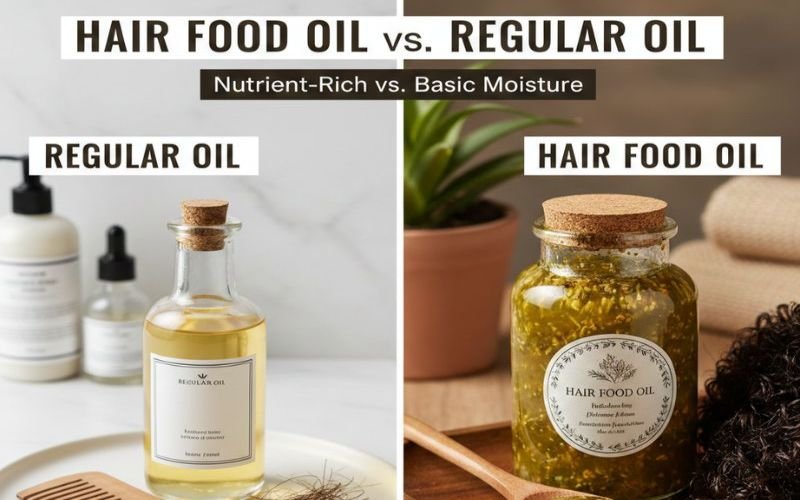
A single-ingredient oil , pure coconut oil, pure argan oil, pure castor oil , is a well-established hair care tool with specific, documented properties. “Hair food oil” refers to blended formulations that combine multiple base oils with additional active ingredients such as vitamins, botanical extracts, essential oils, and plant-derived compounds.
The advantage of a well-formulated blend is that different oils address different needs simultaneously: one may penetrate the hair shaft deeply, another may coat the cuticle for shine and protection, a third may address the scalp specifically. When combined thoughtfully, these ingredients can provide more comprehensive care than any single oil alone.
The disadvantage is that more ingredients means more variability in quality , and some commercial “hair food oils” are primarily mineral oil or silicone with minimal active ingredients, presenting an impressive ingredient list that doesn’t reflect what is actually in meaningful concentrations. Understanding the key ingredients helps you evaluate products intelligently.
Key Ingredients in Hair Food Oil: What the Science Says
The effectiveness of hair food oil depends largely on its ingredients , and research shows that certain oils deliver measurable benefits for hair strength and protection.
Coconut Oil – The Deep Penetrator
Coconut oil is one of the most scientifically studied hair care oils, and it has earned its reputation. Its unique fatty acid profile , predominantly lauric acid, a medium-chain saturated fatty acid , gives it a molecular structure small enough to actually penetrate the hair shaft rather than simply coating the surface.
Research published in the Journal of Cosmetic Science demonstrated that coconut oil, unlike mineral oil and sunflower oil, significantly reduced protein loss from hair when applied before and after washing. This makes it particularly valuable for reducing the mechanical damage caused by washing, combing, and heat styling.
Best for: Dry, damaged, thick, or coarse hair. Caution: Some individuals with fine hair find coconut oil too heavy, and a small percentage of people experience protein sensitivity that can make hair feel harder and more brittle with overuse.
Castor Oil -The Growth Supporter
Castor oil is thick, viscous, and rich in ricinoleic acid , a hydroxyl fatty acid that makes up approximately 90% of its composition. This unusual fatty acid is responsible for castor oil’s distinctive properties: it has documented antimicrobial and anti-inflammatory effects on the scalp, and it creates a thick, protective coating on the hair shaft.
Rigorous clinical studies on castor oil and hair growth are limited, but its antimicrobial properties are well-established, and a healthy scalp environment is a genuine prerequisite for optimal hair growth. It is also widely used to thicken eyebrows and eyelashes, where anecdotal evidence of benefit is strong even if clinical evidence is still developing.
Best for: Scalp health, eyebrow and eyelash care, adding thickness to fine hair ends. Note: Always dilute castor oil with a lighter carrier oil , applied alone, it is too thick to distribute evenly and difficult to wash out.
Argan Oil -The Cuticle Smoother
Argan oil, derived from the kernels of the Moroccan argan tree, is rich in oleic and linoleic acids, as well as vitamin E (tocopherols) and squalene. Unlike coconut oil, it primarily works at the surface of the hair , coating and smoothing the cuticle to reduce frizz, add shine, and protect against heat and environmental damage.
Because it sits on the hair surface rather than penetrating deeply, it is extremely effective as a finishing oil or heat protectant applied to dry or damp hair. It is lighter than castor oil and suitable for fine hair types.
Best for: Frizz control, shine enhancement, heat protection, and as a finishing product for all hair types.
Rosemary Oil – The Evidence-Backed Growth Stimulator
Among botanical ingredients added to hair food oils, rosemary essential oil has the strongest scientific support for hair growth specifically. A randomised controlled trial published in SKINmed Journal in 2015 compared rosemary oil directly with 2% minoxidil (a pharmaceutical treatment for hair loss) over six months in patients with androgenetic alopecia. Both groups showed similar hair count increases by the end of the study, with rosemary oil showing fewer side effects (particularly scalp itching).
The mechanism appears to involve improved scalp microcirculation and anti-inflammatory effects. Rosemary oil should always be diluted in a carrier oil before scalp application , typically 2–3 drops per tablespoon of carrier oil.
Best for: Scalp application for hair growth support, thinning hair, and improving scalp circulation.
Jojoba Oil – The Sebum Mimic
Jojoba oil is technically a liquid wax rather than an oil, and its molecular structure closely resembles human sebum , the natural oil produced by scalp sebaceous glands. This makes it uniquely compatible with the scalp’s natural chemistry: it moisturises without clogging follicles, helps regulate excess sebum production, and is extremely well-tolerated even by sensitive scalps.
Best for: Oily or sensitive scalps, lightweight scalp moisturisation, and as a base oil for diluting essential oils.
Vitamin E (Tocopherol)
Vitamin E is a fat-soluble antioxidant that protects both the scalp and hair from oxidative stress caused by UV exposure, pollution, and free radicals. When applied to the scalp, it can help reduce inflammation and support a healthy follicle environment. A small clinical study found that tocotrienol supplementation (a form of vitamin E) increased hair number in people with hair loss, though topical application evidence is less definitive.
Best for: Antioxidant protection, scalp inflammation reduction.
Biotin (Vitamin B7)
Biotin is frequently included in hair food oil formulations, but an important clarification is warranted: biotin’s documented role in hair health is primarily through dietary intake rather than topical application. Biotin deficiency can cause hair loss, and supplementation corrects this , but topical biotin has not been shown to penetrate the scalp effectively enough to replicate these effects. Its inclusion in topical products is largely marketing-driven.
Honest assessment: Dietary biotin from eggs, nuts, and whole grains is far more relevant to hair health than biotin in a topical oil.
Tea Tree Oil – The Scalp Purifier
Tea tree essential oil has documented antimicrobial and antifungal properties. A controlled study found that a 5% tea tree oil shampoo significantly reduced dandruff symptoms compared to placebo, and it is widely used to address scalp conditions including seborrhoeic dermatitis.
Best for: Dandruff, scalp fungal conditions, oily scalps. Important: Never apply undiluted to the scalp , always dilute in carrier oil.
Neem Oil – The Anti-Dandruff Specialist
Neem oil, derived from the seeds of the neem tree (Azadirachta indica), contains nimbidin and azadirachtin , compounds with well-documented antifungal, antibacterial, and anti-inflammatory properties. It is particularly effective against Malassezia, the yeast most commonly associated with dandruff and seborrhoeic dermatitis.
Best for: Persistent dandruff, itchy scalp, and scalp infections. Note: Neem oil has a very strong, distinctive odour that many people find unpleasant , combining it with a few drops of a pleasant-smelling essential oil (lavender, peppermint) in the blend improves the experience.
Evidence-Based Benefits of Hair Food Oil
When used correctly, hair food oil offers scientifically supported advantages that improve both scalp health and hair strength over time.
Moisture Retention and Reduced Breakage
The primary benefit of hair oiling, supported by the most evidence, is moisture retention. Oils applied before washing (pre-poo oiling) reduce the swelling and mechanical stress that hair undergoes when wet , a process called hygral fatigue , which is a significant cause of breakage in all hair types, particularly curly and coily textures. Applied after washing, oils seal the cuticle and slow moisture evaporation.
Scalp Health Improvement
A healthy scalp is the foundation of healthy hair. Oils with antimicrobial properties (tea tree, neem), anti-inflammatory properties (rosemary, lavender), and sebum-balancing properties (jojoba) address the most common scalp issues , dryness, excess oiliness, dandruff, and irritation , that can impair the hair growth environment.
Frizz Reduction and Cuticle Smoothing
Oils applied to the hair surface smooth the cuticle , the outermost layer of the hair shaft, composed of overlapping scale-like cells. When the cuticle lies flat, hair reflects light more evenly (appearing shinier) and is less susceptible to moisture from the environment causing frizz. Argan oil is particularly effective here.
Heat and Environmental Protection
A layer of oil on the hair surface provides a modest but real barrier against the drying effects of heat styling tools and environmental factors including UV radiation, wind, and pollution. This protective effect is well-documented for coconut oil in particular.
Supporting a Healthy Scalp Environment for Growth
Hair growth depends on healthy follicles, adequate blood supply to the scalp, and the absence of chronic inflammation or infection. Oils that improve scalp circulation (rosemary), reduce inflammation (neem, tea tree), and maintain a healthy sebum balance (jojoba) contribute to this environment. Directly stimulating hair growth beyond what a healthy scalp enables is a different claim , and one that requires more robust clinical evidence for most individual oils.
Choosing the Right Hair Food Oil for Your Hair Type
The effectiveness of hair food oil depends largely on matching the oil to your specific hair type and scalp condition. Using the wrong oil can lead to buildup, heaviness, or irritation , while the right one enhances strength, shine, and manageability.
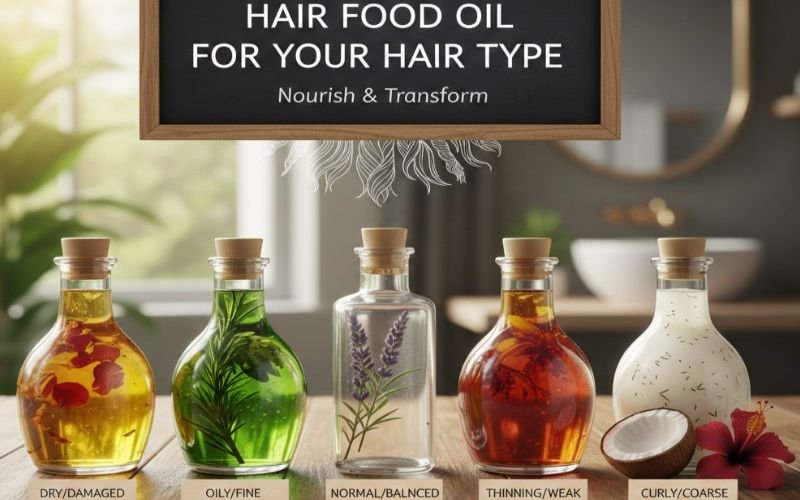
- Dry, thick, or coarse hair: Prioritise deep-penetrating and highly moisturising oils , coconut oil as a primary base, with castor oil added for strengthening and argan oil for surface smoothing. Apply generously and leave for extended periods (overnight is ideal).
- Fine or thin hair: Avoid heavy oils that will weigh hair down and make it appear limp. Jojoba, argan, and grapeseed are the best choices , lightweight, non-greasy, and easily absorbed. Apply sparingly, focusing on mid-lengths and ends rather than roots.
- Curly or coily hair: Curly textures are naturally drier because the spiral shape of the hair shaft makes it difficult for scalp-produced sebum to travel down the length. Richer oils , coconut, castor, sweet almond , applied generously and sealed in with a leave-in conditioner work well. The LOC method (Liquid, Oil, Cream) is a popular framework for maximising moisture retention in curly hair.
- Oily scalp: Focus oil application on mid-lengths and ends, keeping it away from the scalp. If scalp application is desired, use lightweight, non-comedogenic options like jojoba or rosehip. Applying heavy oils to an already-oily scalp can block follicles and worsen congestion.
- Dandruff or itchy scalp: Look for blends containing tea tree oil, neem oil, or salicylic acid alongside carrier oils. These address the fungal or inflammatory causes of dandruff rather than simply moisturising the surface.
- Chemically treated or colour-damaged hair: Focus on oils that strengthen from within (coconut, penetrating deeply) and seal from outside (argan). Protein-sensitive hair , a common condition after repeated chemical treatments , may react poorly to coconut oil overuse; monitor how your hair responds and adjust frequency.
How to Use Hair Food Oil Effectively: A Step-by-Step Guide
Using hair food oil correctly makes the difference between real nourishment and greasy buildup. Follow these steps for maximum benefit.
- Choose your timing. Hair food oil can be used in several ways: as a pre-wash treatment (30 minutes to overnight before shampooing), as a post-wash sealant on damp hair, or as a scalp massage oil independent of washing. Pre-wash application provides the most protective benefit; post-wash application gives the most visible shine and frizz control.
- Use the right amount. A common mistake is using too much oil, which leads to greasy, weighed-down hair that requires aggressive shampooing to remove , creating more damage than the oil prevented. For shoulder-length hair, a teaspoon is typically sufficient for scalp application; a few drops massaged into the palms and run through the lengths for surface application.
- Warm the oil. Gently warming the oil (to body temperature, not hot) improves its spreadability and may modestly improve absorption. A simple method is placing the bottle in warm water for a few minutes, or warming a small amount in your palms.
- Section and apply systematically. Divide hair into sections for thorough coverage. Apply to the scalp first if doing a scalp treatment, using the pads of your fingers (not nails) in gentle circular motions. Then work the oil down through the lengths to the ends.
- Allow adequate time. A minimum of 30 minutes allows surface benefits; overnight application maximises deep nourishment. Cover with a shower cap or old towel if applying overnight to protect your pillowcase and improve oil absorption through mild heat retention.
- Wash out thoroughly but gently. Apply shampoo directly to oily hair before adding water , this is more effective at removing oil than diluting first. One thorough wash with a gentle, sulphate-free shampoo is usually sufficient. Avoid harsh sulphate shampoos, which strip all moisture along with the oil.
- Establish a consistent routine. Once or twice weekly application is appropriate for most hair types. More frequent application can cause buildup; less frequent may not deliver cumulative benefit.
Common Mistakes to Avoid
Applying oil to completely dry hair before heat styling without shampooing out first , oil conducts heat and can cause more damage when used this way. Always apply a dedicated heat protectant if using heat tools, not a nourishing hair oil as a substitute.
Focusing all oil on the scalp while neglecting the lengths and ends , the ends of your hair are the oldest and most damaged section, often needing the most attention.
Expecting overnight results , hair oil benefits accumulate over consistent weeks of use, not days.
Choosing a product based on the ingredient list without checking concentration , some products list beneficial ingredients that are present in negligible amounts. A short list of high-quality, concentrated ingredients often outperforms a long list of impressive-sounding ones present in trace quantities.
A Simple DIY Hair Food Oil Blend
For those who prefer making their own blend with full ingredient control:
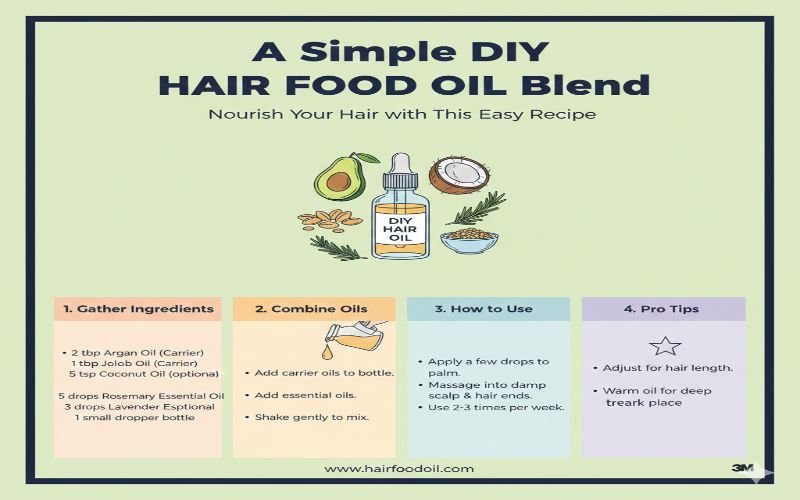
All-round nourishing blend (for normal to dry hair):
- 3 tablespoons coconut oil (base, penetrating moisture)
- 2 tablespoons argan oil (surface smoothing, shine)
- 1 tablespoon castor oil (scalp health, strength)
- 5 drops rosemary essential oil (scalp circulation)
- 3 drops lavender essential oil (scalp health, pleasant scent)
Mix in a small glass bottle. Warm before use. Apply weekly as a pre-wash treatment.
Lightweight blend (for fine or oily hair):
- 3 tablespoons jojoba oil (sebum-balancing, non-greasy)
- 1 tablespoon grapeseed oil (lightweight, antioxidant)
- 1 teaspoon neem oil (scalp antimicrobial)
- 4 drops tea tree essential oil (scalp clarifying)
- 4 drops peppermint essential oil (cooling, circulation)
The Bottom Line
Hair food oil is one of the most well-supported, time-tested hair care practices available , when approached with realistic expectations and the right ingredients for your hair type. Its core benefits , moisture retention, cuticle protection, scalp health, and reduced breakage , are genuine and achievable with consistent use.
The key is choosing products or blends with ingredients that match your specific needs, applying them correctly, and maintaining a consistent routine. Hair health is cumulative, and the results of regular oiling , stronger, shinier, more manageable hair , tend to become visible over weeks and months rather than immediately.






- Be Respectful
- Stay Relevant
- Stay Positive
- True Feedback
- Encourage Discussion
- Avoid Spamming
- No Fake News
- Don't Copy-Paste
- No Personal Attacks
- Be Respectful
- Stay Relevant
- Stay Positive
- True Feedback
- Encourage Discussion
- Avoid Spamming
- No Fake News
- Don't Copy-Paste
- No Personal Attacks
