How to Check Transmission Fluid: Complete Guide
Published: 21 Jan 2026
Your vehicle’s transmission is the powerhouse that keeps you moving smoothly down the road. But like any hardworking component, it needs proper care and attention,specifically, the right amount of clean transmission fluid. Whether you’re a seasoned DIY enthusiast or someone who’s never popped the hood before, learning to check your transmission fluid is one of those essential skills that can save you from costly repairs down the line.
Think of transmission fluid as the lifeblood of your car’s gear system. It lubricates moving parts, prevents overheating, and ensures those seamless gear transitions you barely notice. When fluid levels drop or the quality deteriorates, your transmission starts suffering in ways that can quickly escalate from minor annoyances to major mechanical failures.
Why Regular Transmission Fluid Checks Matter
Checking your transmission fluid regularly isn’t just about following a maintenance schedule,it’s about catching problems before they become expensive disasters. Low fluid levels can cause grinding gears, delayed shifting, and excessive heat buildup that damages internal components. Dark, contaminated fluid loses its ability to protect your transmission, leading to increased friction and premature wear.
Most automotive experts recommend checking transmission fluid at least monthly, though your specific vehicle might have different requirements based on driving conditions and manufacturer specifications.
- Helps detect leaks and contamination early, preventing costly transmission repairs or replacements.
- Ensures smooth gear shifting and optimal performance in both automatic and manual transmissions.
- Extends transmission lifespan by maintaining proper lubrication and temperature control.

Understanding Your Transmission Type
Before you grab a rag and head to your driveway, you need to know what type of transmission system your vehicle has. Modern cars typically come with either a traditional transmission with a dipstick or a sealed transmission without one. This distinction completely changes how you’ll approach the inspection process.
Front-wheel-drive vehicles usually have the transmission dipstick located to the right of the oil dipstick, while rear-wheel-drive models often position it toward the back of the engine bay near the firewall. If you don’t see any dipstick after a thorough search, you likely have a sealed transmission system.
Step-by-Step Guide for Checking Transmission Fluid
Checking your transmission fluid regularly helps maintain smooth gear shifts and prolongs the life of your vehicle’s transmission. Low or dirty fluid can lead to slipping gears, overheating, or costly repairs. Follow these steps carefully to ensure your transmission stays in top condition.
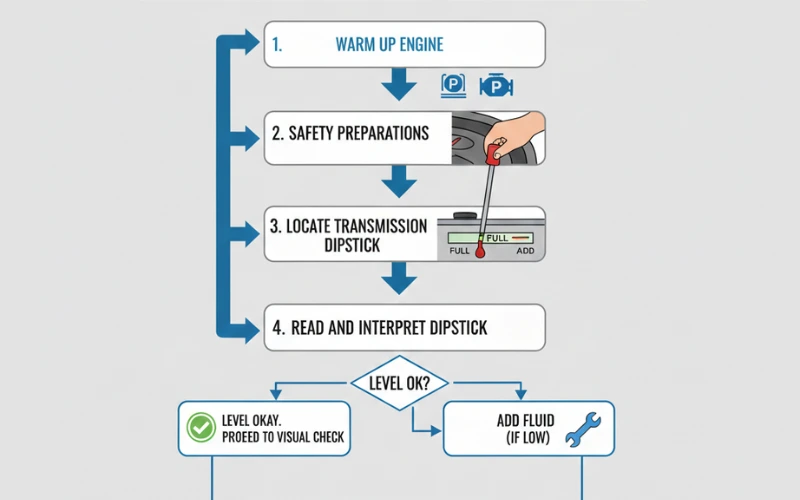
Warm Up Your Engine First
You can’t check transmission fluid with a cold engine and expect accurate results. The fluid expands as it heats up, so checking when cold will give you a misleadingly low reading that might cause you to overfill.
Start your engine and let it run for approximately five minutes. Some experts recommend putting your foot on the brake and cycling through all the gears slowly before returning to park. This circulates the fluid throughout the system and ensures a proper reading.
Safety Preparations
Before opening your hood, take these important safety measures:
- Park your vehicle on a completely level surface
- Engage the parking brake firmly
- Ensure the vehicle is in park
- Keep the engine running at idle
Locate the Transmission Dipstick
Pop your hood and look for the transmission fluid dipstick. It’s typically marked with a bright-colored handle,usually red, yellow, or orange,and clearly labeled “Transmission” or with a transmission symbol. Don’t confuse it with your engine oil dipstick, which is usually yellow or has an oil can symbol.
If you’re having trouble locating it, consult your owner’s manual for a diagram showing the exact position for your make and model.
Reading and Interpreting the Dipstick
Pull out the dipstick and wipe it clean with a lint-free cloth or paper towel. This first pull removes any splashed fluid that could give you an inaccurate reading. Insert the dipstick back into the tube completely, then pull it out again to check the actual fluid level.
The dipstick will have markings indicating “Full,” “Add,” or “Hot” and “Cold” zones. Your fluid level should reach the “Full” marking when the engine is at operating temperature. If it falls below this line, you’ll need to add more fluid using a funnel designed for transmission systems.
Assessing Fluid Color and Condition
The dipstick reading tells only part of the story. Wipe the fluid onto a clean white cloth or paper towel and examine both its color and consistency. This visual inspection reveals crucial information about your transmission’s health.
- Fresh transmission fluid appears bright red and translucent,almost see-through with a vibrant hue.
- As it ages and accumulates contaminants, the color gradually shifts through a spectrum that indicates its condition.
Transmission Fluid Color Guide
When your fluid maintains that vibrant red color with full transparency, your transmission is in excellent health. This indicates new or recently changed fluid that’s performing all its protective functions effectively. No action is needed beyond regular monitoring.A light brown or orange tint shows the fluid is still functional but beginning to age. As long as you can still see through it and it doesn’t smell burnt, you can continue driving. However, start planning for a fluid change in the near future,typically within a few thousand miles.
Dark brown, opaque fluid signals oxidation. The fluid has lost much of its viscosity and is filling with air bubbles that prevent proper lubrication. At this stage,usually around 30,000 miles,you should schedule a transmission fluid change promptly to prevent damage.Nearly black fluid accompanied by a burnt odor means your transmission has been running hot and the fluid is severely degraded. This condition offers minimal lubrication and puts your transmission at serious risk. Schedule professional service immediately to prevent costly transmission failure.
Pink or milky-looking fluid indicates water or coolant has mixed with your transmission fluid, often due to a leak in the cooling lines or radiator. This contamination can cause severe transmission damage and requires immediate professional attention to locate and repair the leak.

Adding Transmission Fluid Correctly
If your fluid level is low, you’ll need to add the correct type specified in your owner’s manual. Different vehicles require different transmission fluid formulations, and using the wrong type,even in small quantities,can cause transmission problems.
- Use a clean funnel to pour fluid slowly into the dipstick tube.
- Add small amounts at a time, checking the level frequently to avoid overfilling.
- Overfilling can be just as damaging as running low, causing foaming, pressure problems, and potential leaks.
What About Sealed Transmissions?
Many newer vehicles feature sealed transmissions without a dipstick. These systems are designed to limit fluid evaporation and reduce waste, with manufacturers claiming the fluid lasts the vehicle’s “lifetime”,typically defined as around 100,000 miles.
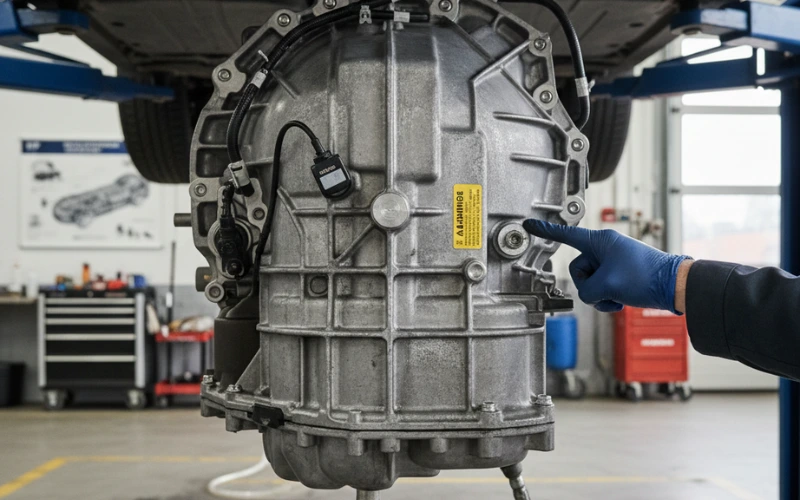
However, sealed doesn’t mean maintenance-free. Professionals can still access the fluid through special plugs on the transmission case, though this requires lifting the vehicle and using specific tools. Don’t attempt to check or change sealed transmission fluid yourself, as even small mistakes can cause significant damage.
Since you can’t easily check the fluid in sealed transmissions, watch for these symptoms that indicate service is needed:
- Strange grinding noises when shifting gears.
- Hesitation or delay before gears engage.
- Noticeable lag during acceleration.
- Difficulty shifting or rough transitions between gears.
If you experience any of these issues, schedule professional service promptly. Many experts recommend having sealed transmissions professionally inspected every 30,000 to 40,000 miles, especially if you drive in extreme conditions, tow heavy loads, or frequently travel in mountainous terrain.
Manual Transmission Considerations
Checking fluid in manual transmissions requires a different approach. Most manual transmissions have a fill plug underneath the vehicle that requires lifting the car with a jack and stands. For safety and convenience, most drivers prefer having this checked at a professional service center.
The correct fluid level in a manual transmission typically reaches just to the bottom of the fill hole. Overfilling or underfilling can both cause problems, so precision is important.
How Often Should You Check?
For vehicles with accessible dipsticks, check your transmission fluid monthly as part of your routine maintenance. This frequency allows you to catch slow leaks or gradual deterioration before they cause problems.
During your monthly check, also inspect for signs of leaks underneath your vehicle. Transmission fluid leaks typically appear as reddish-brown puddles near the front-middle of the vehicle and have an oily consistency.
- Check transmission fluid more frequently if you drive in heavy traffic, tow loads, or operate in extreme temperatures.
- Look for fluid that appears dark, burnt-smelling, or gritty, as these are signs it needs immediate attention.
- Address even small leaks promptly to prevent low fluid levels and potential transmission damage.
Transmission Fluid Change Intervals
Even if your fluid level stays consistent, the fluid itself degrades over time and needs replacement. Most manufacturers recommend changing transmission fluid every 50,000 to 100,000 miles, though this varies significantly based on several factors.
Your driving habits play a major role in fluid lifespan. Frequent stop-and-go city driving, towing heavy loads, driving in extreme temperatures, or operating in mountainous areas all stress your transmission and require more frequent fluid changes. Consult your owner’s manual for specific recommendations for your vehicle and driving conditions.
Common Mistakes to Avoid
Never check transmission fluid with a cold engine. The reading will be inaccurate and potentially lead to overfilling, which creates pressure problems and can damage seals.Transmission fluids aren’t universal. Automatic transmissions, manual transmissions, and CVTs each require specific formulations. Always use the exact type specified in your owner’s manual.Don’t wait for obvious problems before checking your fluid. By the time you notice shifting issues, overheating, or strange noises, damage may already be occurring.
- If your vehicle has a sealed transmission, don’t try to access it yourself.
- The specialized tools and procedures required mean this job is best left to professionals who have proper equipment and training.
- While checking transmission fluid yourself is valuable for regular monitoring, periodic professional inspections offer deeper insights.
- Trained technicians can perform comprehensive transmission diagnostics, check for internal wear patterns, inspect for leaks you might miss, and use specialized equipment to assess sealed transmissions.
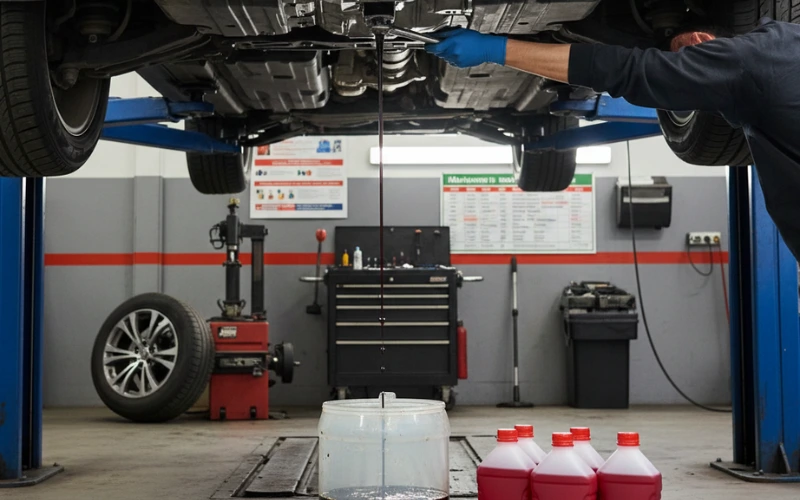
Many service centers offer transmission fluid exchanges or flushes that completely replace old fluid throughout the system,something you can’t achieve with simple top-offs at home.
Maintaining Long-Term Transmission Health
Beyond regular fluid checks, consider these practices to extend your transmission’s lifespan:
- Warm up your vehicle before driving in cold weather.
- Avoid aggressive acceleration and hard braking.
- Don’t shift into drive or reverse while still rolling.
- Use the parking brake on inclines to reduce transmission stress.
- Consider installing an auxiliary transmission cooler if you tow frequently.
According to data from AutoZone, proper fluid maintenance can significantly extend transmission life and prevent the kind of overheating that leads to expensive failures.
Environmental Considerations
Used transmission fluid is considered hazardous waste and cannot be disposed of in regular trash or poured down drains. If you perform your own fluid changes, take the used fluid to a recycling center, auto parts store, or service facility that accepts it. Many locations accept used automotive fluids for free recycling.
The shift toward sealed transmissions partly addresses this environmental concern by reducing the frequency of fluid changes and minimizing waste generation.
- Never mix transmission fluid with other waste liquids, as this can make recycling difficult or impossible.
- The store used fluid in a clean, sealed container to prevent spills and environmental contamination.
- Check local regulations for approved disposal locations and recycling guidelines in your area.
Understanding Transmission Failure Costs
The motivation for diligent transmission fluid maintenance becomes clear when you consider the costs of neglect. A simple fluid change might cost a couple hundred dollars, while transmission repairs can run into thousands. Complete transmission replacement on modern vehicles often exceeds $5,000 to $7,000 for parts and labor.
Regular fluid checks and timely changes represent one of the most cost-effective preventive maintenance investments you can make. For more information on transmission care, the Jiffy Lube Resource Center offers comprehensive maintenance guidelines.
Final Thoughts
Checking your transmission fluid isn’t complicated, but it requires attention to detail and consistency. Whether you have a traditional dipstick system or a sealed transmission, understanding your vehicle’s needs and watching for warning signs keeps your transmission healthy for the long haul.
Make transmission fluid checks part of your monthly routine, along with checking oil, tire pressure, and other fluid levels. This small time investment,usually just five to ten minutes,can alert you to problems while they’re still minor and inexpensive to fix. Your transmission works hard every time you drive; giving it this basic care ensures it keeps working reliably for years to come.
Remember that transmission systems are complex, and when in doubt, professional guidance is always worth seeking. Technicians have specialized training, diagnostic equipment, and experience that can identify issues you might miss. Building a relationship with a trusted service center means you have expert support whenever transmission questions or concerns arise.
FAQs
1.How often should I check the fluid?
It is recommended to check your transmission fluid once a month to catch leaks or changes in color before they become major problems.
2.What are the signs of low transmission fluid?
Common symptoms include “slipping” gears (engine revs but the car doesn’t speed up), delayed shifting, or a grinding/whining noise while driving.
3.Should the engine be running or off?
For most vehicles, the engine must be running at operating temperature. However, some brands (like Honda) may require the engine to be turned off just before checking. Always consult your manual first.
4.Can I check manual transmission fluid this way?
Usually, no. Manual transmissions rarely have dipsticks. Checking them typically requires jacking up the car and removing a filler plug on the side of the transmission case.


- Be Respectful
- Stay Relevant
- Stay Positive
- True Feedback
- Encourage Discussion
- Avoid Spamming
- No Fake News
- Don't Copy-Paste
- No Personal Attacks
- Be Respectful
- Stay Relevant
- Stay Positive
- True Feedback
- Encourage Discussion
- Avoid Spamming
- No Fake News
- Don't Copy-Paste
- No Personal Attacks
